
Before you buy pre-owned: a due diligence checklist that actually protects you
Fakes are only one risk. Mixed-part watches, stolen watches, and misdescribed condition cost buyers too. Here is a step-by-step checklist for any pre-owned purchase.
Quick answer
Before you buy a pre-owned luxury watch, check five things in order: the seller, the paperwork, whether the watch is reported lost or stolen, the watch itself (ideally opened by a qualified watchmaker), and a payment method with buyer protection. Counterfeits are only one risk. Mixed parts, stolen watches, and generous condition descriptions cost buyers money too.
Key takeaways
- Verify the seller before you verify the watch.
- Match serial and reference numbers across the watch and its papers, and remember papers can be faked too.
- Pay in a way that gives you recourse, and get the return policy in writing.
- For expensive watches, an independent inspection costs far less than a mistake.
In this article
- The risks are broader than fakes
- Step 1: Vet the seller
- Step 2: Check the paperwork
- Step 3: Check the watch’s status
- Step 4: Inspect the watch
- Step 5: Pay safely
- Fakes, Frankenwatches, and other ways to lose money
- Red flags that should stop the deal
- Questions to ask every seller
- Dealer, marketplace, auction, or private sale?
- The day the watch arrives
- Brand-specific checks
- Why this is worth the effort
- Frequently asked questions
The risks are broader than fakes
High-quality counterfeits exist and keep improving. But buyers also lose money in quieter ways: genuine watches assembled from mixed or aftermarket parts, watches that were reported stolen, and watches whose condition or service history has been described generously. A good process protects you against all of them.
Step 1: Vet the seller
- Prefer established dealers with a physical address, a track record, and a clear return policy.
- On marketplaces, check how long the seller has been active and read the negative reviews, not just the overall score.
- Be cautious when the price sits well below the market range for that exact reference. A real discount usually has a reason.
Step 2: Check the paperwork
- Ask for clear photos of the warranty card or certificate, and of the reference and serial numbers on the watch itself.
- Confirm that they match.
- Treat papers as support for authenticity, not proof. They can be forged as well.
- Ask for service records and receipts, and check them with the service centre where you can.
Step 3: Check the watch’s status
- Search the stolen watch registers available to you, such as The Watch Register run by The Art Loss Register.
- Ask the seller directly whether the watch has ever been reported lost or stolen, and get the answer in writing.
Step 4: Inspect the watch
- Assess overall condition: polishing, sharpness of the case edges, scratches, and bracelet stretch.
- Check that the dial, hands, bezel, and bracelet are correct for the reference and its production period. Reference-specific guides and collector forums help here.
- Ask when the watch was last serviced, and check that it keeps reasonable time.
- For high-value purchases, have a qualified independent watchmaker or the brand’s service centre inspect it, ideally with the case opened so the movement can be checked.
Step 5: Pay safely
- Use a payment method with buyer protection, or an escrow service for private sales.
- Never pay by untraceable methods to someone whose identity you cannot verify.
- Get an invoice listing the reference, serial number, condition, everything included, and the return terms.
Fakes, Frankenwatches, and other ways to lose money
It helps to know exactly what you are guarding against. The risks fall into four groups, and only the first is a counterfeit in the usual sense.
| Risk | What it is | How it is usually caught |
|---|---|---|
| Counterfeit | A watch made to imitate a genuine one. The best are close enough to fool photos. | Opening the case and examining the movement, or a check by the brand |
| Frankenwatch | A genuine watch built from mixed or aftermarket parts, such as a replaced dial, hands, bezel, or bracelet | Comparing every part with the reference and production period, and an opened-case inspection |
| Undisclosed modification | Aftermarket diamonds, refinished or redialled dials, heavy polishing | Close inspection of the case edges and dial printing under magnification |
| Stolen or encumbered watch | A genuine watch that was reported lost or stolen, or used as security for a loan | Stolen registers, the seller’s written statement, and a clear paper trail |
Frankenwatches and modifications are especially costly because they are genuine watches. They pass casual checks, but the market prices them far below an original example, and a manufacturer service centre may replace non-original parts at your cost. That is why an opened-case inspection matters even when you are sure the watch is real.
The single best protection. For any watch that costs more than you would be comfortable losing, make the purchase conditional on an inspection by a qualified watchmaker or the brand, inside the return window.
Red flags that should stop the deal
Most bad deals announce themselves early. If you see any of these, pause, ask questions, and be ready to walk away.
| Red flag | Why it matters | What to do |
|---|---|---|
| Price well below the sold range for the exact reference | Real discounts have reasons, and the reason is rarely in your favour | Ask why, and assume the worst until proven otherwise |
| Pressure to decide quickly | Urgency stops you checking | Say no to deadlines you did not set |
| Request for bank transfer, crypto, or cash only | No buyer protection if something goes wrong | Use a protected payment method or escrow, or walk away |
| Photos that hide the serial, caseback, or clasp | The most important evidence is missing | Ask for specific photos, including a short video |
| Papers that do not match the watch | Possible swapped or fake papers | Treat the watch as undocumented, or walk away |
| Vague service history | Possible non-original parts or poor work | Ask for invoices, or price in a full service |
| Seller will not allow an independent inspection | Removes your main protection | Walk away |
Questions to ask every seller
Ask these in writing, so you have a record of the answers. Good sellers answer them quickly and specifically.
- Where and when was the watch originally bought, and are you the first owner?
- Does the serial on the guarantee card match the watch, and can you send a photo of both?
- Has the watch ever been reported lost or stolen?
- When was it last serviced, by whom, and do you have the invoice?
- Have any parts been replaced? If so, which, and were they genuine?
- Has the case or bracelet been polished?
- Is the bracelet original, and are all the links included?
- How is the watch running, and has it been measured on a timing machine?
- What is your return policy, and how many days do I have to inspect it?
- Will you allow an independent watchmaker to inspect it before payment is final?
- How will the watch be shipped and insured?
- Why are you selling?
Dealer, marketplace, auction, or private sale?
| Channel | Typical price | Buyer protection | Main risk |
|---|---|---|---|
| Authorised dealer, certified pre-owned | Highest | Strongest, with a manufacturer-backed guarantee | Paying a premium for certainty |
| Established independent dealer | Market level | Return policy and dealer guarantee | Quality of the dealer’s own checks varies |
| Marketplace (for example, Chrono24) | Market level, wide range | Platform protection, often with escrow | Seller quality varies widely |
| Auction house | Varies, plus buyer’s premium | Limited, catalogue descriptions matter | Fees, and limited time to inspect |
| Private sale | Lowest | Little or none unless you use escrow | Highest fraud and condition risk |
The cheapest channel is rarely the cheapest outcome. A private sale that saves 5% but skips an inspection can cost you the whole price of the watch. Match the channel to how much risk you can afford, and pay for protection on expensive watches.
The day the watch arrives
- Film the unboxing. A continuous video of the sealed parcel being opened protects you if the contents are wrong.
- Check the serial again. Compare it with the papers and with the photos the seller sent.
- Check the timekeeping. Track it over several days. A large or erratic deviation can point to a service need.
- Do not swim with it yet. Water resistance depends on seals and should be tested, especially if the service history is unknown.
- Book the inspection inside the return window. If anything is wrong, you want to find out while you can still send it back.
- Insure it. Add the watch to your insurance with photos, the serial number, and the purchase receipt.
Brand-specific checks
Every brand has its own tells. These are the ones buyers most often ask about. They narrow the risk. They do not replace a professional inspection.
| Brand | Useful checks |
|---|---|
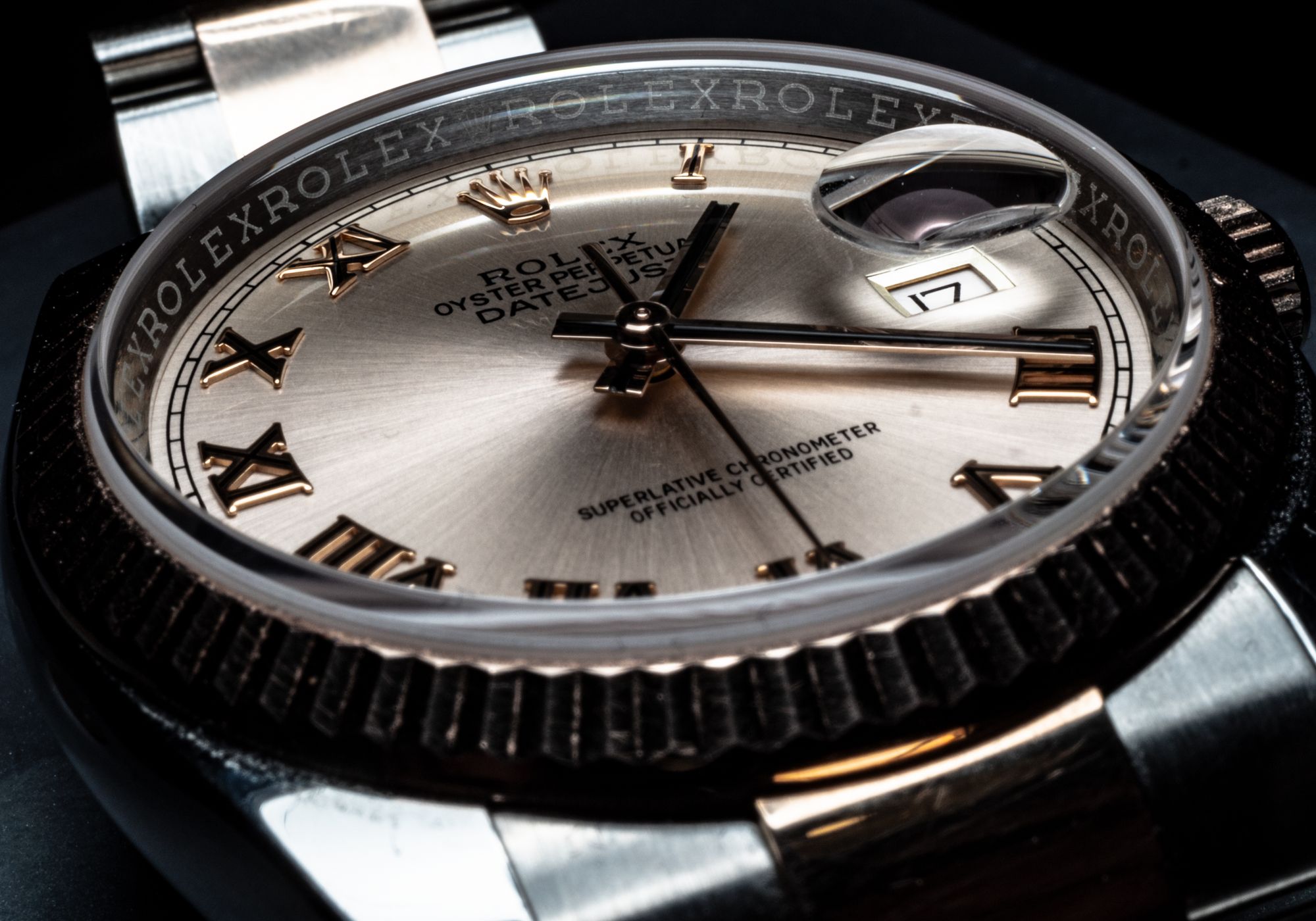
| Rolex | Serial on the guarantee card matches the watch. Modern Rolex crystals carry a tiny etched crown near six o’clock. Check the engraving on the inner bezel ring and the quality of the dial printing. |
| Patek Philippe | Certificate of Origin matching the movement and case numbers. For watches first sold more than ten years ago, Patek can issue an Extract from the Archives, though it states this is not proof of authenticity. |
| Audemars Piguet | Matching serial on the papers and case. The Royal Oak’s finishing, with its alternating brushed and polished surfaces, is hard to copy well and easy to ruin with polishing. |
| Omega | Matching warranty card and serial. Omega can confirm details of older watches through its archives. |
| Cartier | Serial and reference engraved on the caseback should match the papers. Check the crown cabochon and the quality of the Roman numerals and secret signature on the dial. |
| Tudor | Matching warranty card and serial. Check that the bracelet and clasp are correct for the reference. |
Reference-specific collector forums are often the fastest way to learn what a correct example looks like, especially for older watches where parts changed during production.
Why this is worth the effort
The market already prices risk. Hilco Global’s 2026 assessment suggests undocumented watches warrant a discount of roughly 15 to 25% against comparable documented pieces. Doing your own due diligence is how you avoid paying a documented price for an undocumented risk.
A checklist reduces risk, it does not remove it. For expensive watches, professional authentication is money well spent.
Free tool
Before you buy, check the price as carefully as the watch. The Deal Analyzer shows fair value, your Bottom Cash Value, and the most you should pay.
Open the Deal AnalyzerFrequently asked questions
How can I tell if a pre-owned watch is genuine?
No single check is enough. Match the serial to the papers, buy from a seller with a track record and a return policy, and have the watch inspected by a qualified watchmaker or the brand, ideally with the case opened.
Do box and papers prove a watch is authentic?
No. Papers support authenticity and help resale, but fake papers exist and genuine ones can be paired with the wrong watch. Always verify the watch itself.
How do I check if a watch is stolen?
Search the stolen watch registers available to you, such as The Watch Register, and ask the seller in writing whether the watch has ever been reported lost or stolen.
What is the safest way to pay for a pre-owned watch?
A payment method with buyer protection, or an escrow service that releases payment only after you have received and checked the watch. Avoid bank transfers, crypto, and cash for private sales.
Should I buy a watch without a recent service?
You can, but price in the cost of a full service and assume the watch may need one soon. Ask for the last service invoice if there is one.
Sources