Rolex by family: what transaction prices show from 2024 to 2026
The Datejust is up about 20% since 2024. The Daytona is still a quarter below its peak. Transaction data shows Rolex families moving in opposite directions, and why that matters before you buy.
Quick answer
Rolex prices are moving in different directions by family. On BQ Watches’ transaction index (Q1 2024 = 100), the Datejust reached 122 in Q2 2026 while the Daytona sat at 75. Popular steel sports models such as the Daytona and GMT-Master II Pepsi still trade 70% or more above US retail, the Submariner around 25 to 40% above, while the Explorer, Oyster Perpetual, and Datejust trade close to retail, and gold models below it.
Key takeaways
- Transaction data shows Rolex families moving in very different directions. Against a Q1 2024 base of 100, the Datejust stood at 122 in Q2 2026, the Daytona at 75.
- The models that cooled most since the boom are the ones that were most hyped. The quieter, more wearable models have been the strongest.
- Steel Rolex retail prices were unchanged through both 2026 increases, which landed on gold and two-tone models. That matters for how steel premiums hold up.
- This is one dealer’s transaction index. It is useful because it tracks sold prices rather than asking prices, but treat it as one signal among several.
In this article
- The data
- The Datejust: the quiet winner
- The Daytona: still deflating
- Submariner and GMT-Master: steady and recovering
- Reference by reference: market price versus retail in 2026
- Four tiers of Rolex in 2026
- What two years of index moves meant in euros
- Why retail prices matter here
- What this means for buyers
- Method and caveats
- Frequently asked questions
“Rolex prices” is not one number. A Datejust and a Daytona share a name on the dial and very little else in how their markets behave. Since 2024 the gap between Rolex families has widened, and the clearest evidence comes from transaction data rather than listings.
The data
BQ Watches, a UK dealer, publishes a quarterly Transaction Price Index for six Rolex families based on its own completed sales. Each family is indexed to Q1 2024 = 100. The index tracks transacted prices, not asking prices, and a family is only published when it has at least ten transactions in the quarter. BQ does not publish the underlying median prices.
| Family | Q2 2024 | Q2 2025 | Q1 2026 | Q2 2026 |
|---|---|---|---|---|
| Datejust | 102 | 104 | 123 | 122 |
| Submariner | 100 | 104 | 106 | 105 |
| GMT-Master | 87 | 84 | 99 | 99 |
| Oyster Perpetual | 85 | 90 | 100 | 98 |
| Daytona | 78 | 74 | 74 | 75 |
| Sea-Dweller | n/a | 72 | 88 | n/a |
Where each Rolex family stands, Q2 2026
Transaction Price Index, Q1 2024 = 100. Gold bars are above the base, blue bars below.
Source: BQ Watches, Pre-Owned Market Index Q2 2026.
The Datejust: the quiet winner
The Datejust is the standout. Its index rose from 102 in Q2 2024 to 122 in Q2 2026, a gain of about 20%. Loupe’s Q1 2026 data points the same way at the reference level: the vintage Datejust 36 ref. 16030 rose 21.3% between December 2025 and March 2026, and the Oyster Perpetual 36 ref. 126000 rose 19.3%.
Our read, and it is an opinion: demand has shifted from watches bought as trades to watches bought to wear. The Datejust and Oyster Perpetual are classic, versatile, and comparatively affordable Rolex models. They never had the extreme boom premiums of the sports models, so they had less air to let out.

The Daytona: still deflating
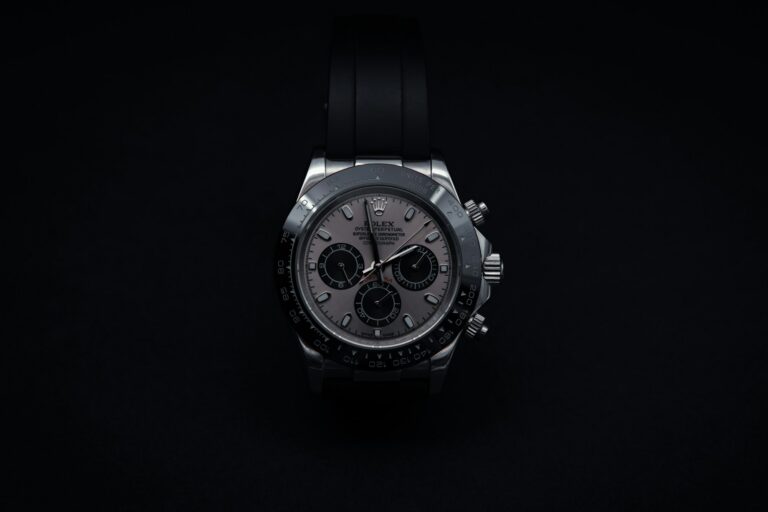
The Daytona tells the opposite story. Its index fell from 78 to 74 between Q2 2024 and Q2 2025 and has barely moved since, standing at 75 in Q2 2026. BQ’s buying desk describes Daytona prices as roughly a quarter below the 2024 peak and stabilising.
The Daytona was the most extreme symbol of the boom, and it carried the largest premium over retail. When speculative demand left the market, the watches with the most speculative premium had the furthest to fall.
Two-year change by Rolex family, Q2 2024 to Q2 2026
Percentage change in the BQ Transaction Price Index. Calculated by The Dial Report.
Source: BQ Watches, Pre-Owned Market Index Q2 2026. Calculations by The Dial Report.
Submariner and GMT-Master: steady and recovering
The Submariner has been the most stable family, moving between 100 and 106 throughout. The GMT-Master recovered from 84 in Q2 2025 to 99 a year later. Both sit close to where they started in early 2024.
Not every reference followed its family. Loupe’s biggest Q1 2026 decliners included several vintage Rolex models: the GMT-Master ref. 16750 fell 23.1%, the Sea-Dweller ref. 16660 fell 18.1%, and the Submariner ref. 5513 fell 17.7%. The modern Day-Date 40 ref. 228238 fell 21.2%. Family averages hide sharp moves in individual references, especially vintage ones.
Reference by reference: market price versus retail in 2026
The index shows direction. This table shows level: where twelve core Rolex references trade against their 2026 US retail price. Retail comes from the January 2026 list reported by Loupe. Market ranges are the published 2026 ranges we use in the Deal Analyzer, drawn from WatchScanning’s 2026 Rolex price guide and our own research.
| Reference | US retail 2026 | Market range 2026 | Midpoint vs retail |
|---|---|---|---|
| Daytona 126500LN | $16,900 | $24,000 to $35,000 | +75% |
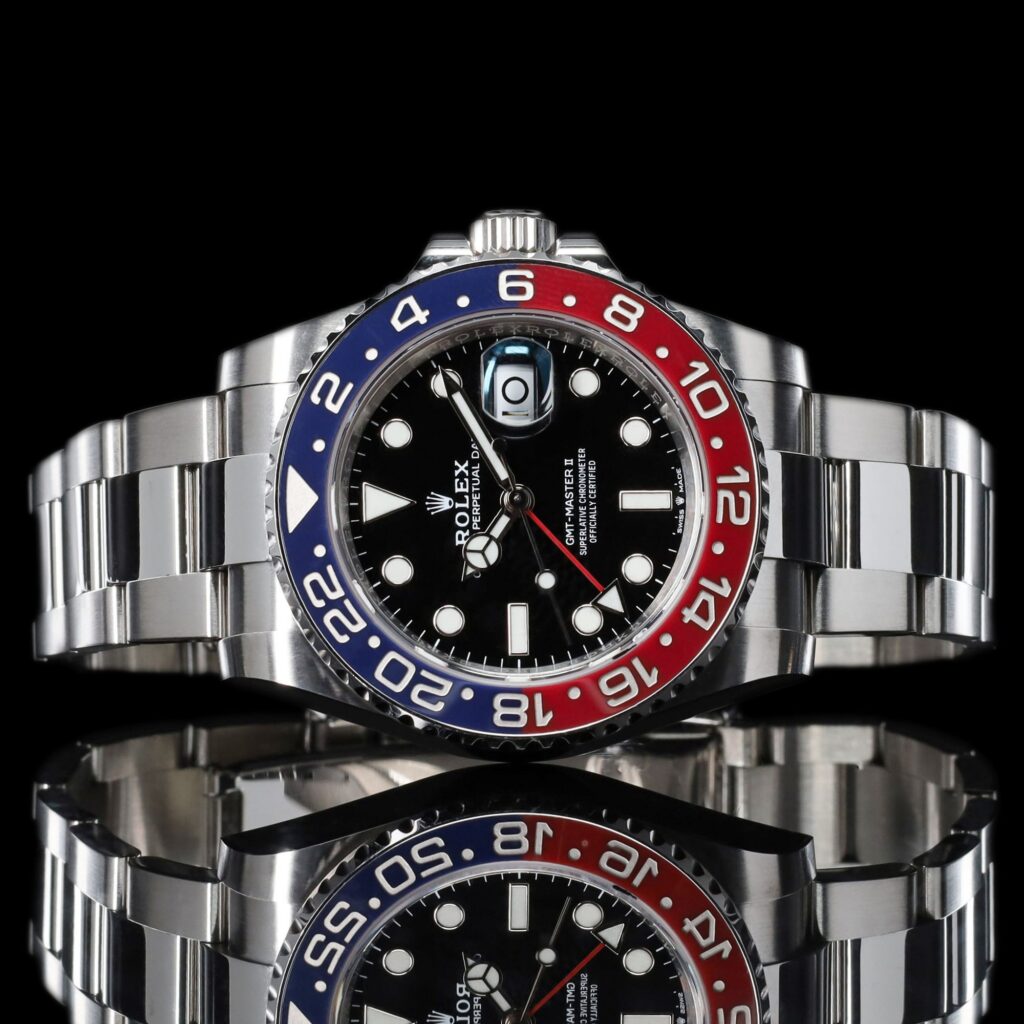
| GMT Pepsi 126710BLRO | $11,800 | $18,000 to $23,000 | +74% |
| GMT Batman 126710BLNR | $11,800 | $15,000 to $18,000 | +40% |
| GMT Sprite 126720VTNR | $11,800 | $15,000 to $18,000 | +40% |
| Submariner Date 126610LN | $10,250 | $13,000 to $15,000 | +37% |
| Sky-Dweller 326934 | $15,000 | $18,000 to $22,000 | +33% |
| Submariner 124060 | $10,050 | $12,000 to $13,500 | +27% |
| Explorer 36 124270 | $7,900 | $7,600 to $8,500 | +2% |
| Explorer II 226570 | $9,550 | $9,000 to $10,000 | −1% |
| Oyster Perpetual 41 124300 | $7,350 | $7,000 to $7,500 | −1% |
| Datejust 41 126334 | $9,550 | $9,000 to $9,800 | −2% |
| Day-Date 40 228238 (gold) | $40,000 | $32,000 to $36,000 | −15% |
Market price versus US retail, core Rolex references, 2026
Midpoint of the published 2026 market range divided by US retail.
Source: Loupe (retail), WatchScanning and The Dial Report (market ranges). Our calculation.
Four tiers of Rolex in 2026
| Tier | References | What it means for buyers |
|---|---|---|
| Large premium, 70% or more | Daytona, GMT-Master II Pepsi | Retail is the bargain if you can get one. Pre-owned buyers pay heavily for availability and carry the most downside if sentiment cools. |
| Moderate premium, 25 to 40% | Submariner, GMT-Master II Batman and Sprite, Sky-Dweller | Deep, steady markets. Pay close to the middle of the sold range and the risk is moderate. |
| At or near retail | Explorer, Explorer II, Oyster Perpetual, Datejust | The cleanest buys. You pay roughly what new costs and rising retail prices support the market. |
| Below retail | Precious-metal models such as the Day-Date | Pre-owned saves real money, but expect the market to return a smaller share of retail when you sell. |
What two years of index moves meant in euros
To make the index concrete, here is what a €10,000 purchase in the second quarter of 2024 would have been worth two years later if it had followed its family’s index exactly.
| Family | Index Q2 2024 | Index Q2 2026 | €10,000 became | Change |
|---|---|---|---|---|
| Datejust | 102 | 122 | €11,961 | +19.6% |
| Oyster Perpetual | 85 | 98 | €11,529 | +15.3% |
| GMT-Master | 87 | 99 | €11,379 | +13.8% |
| Submariner | 100 | 105 | €10,500 | +5.0% |
| Daytona | 78 | 75 | €9,615 | −3.8% |
The spread between the best and worst family is more than 23 percentage points in two years, within a single brand. It is the clearest evidence we know that the reference you choose, and the price you pay, matter more than the name on the dial.
Why retail prices matter here
Rolex raised prices twice in 2026, but only on precious metals: roughly 7 to 9% on gold models in January and another 5% on gold and 2.5% on two-tone models in June. Steel, platinum, and titanium were unchanged both times.
That is important for steel models. A premium over retail shrinks when retail rises, even if secondary prices stand still. Steel retail standing still in 2026 supports the premiums that steel Submariners and GMT-Masters still command. For gold models the opposite applies: every retail increase widens the gap between what a new gold Rolex costs and what the secondary market will pay for it.
What this means for buyers
- Look at the family, then the reference. “Rolex is up” or “Rolex is down” is not useful. The Datejust and the Daytona have moved in opposite directions.
- Be wary of the most hyped models. The bigger the premium over retail, the more of the price depends on sentiment, and sentiment can change.
- Classic models can be the better store of value. Lower premiums, broad demand, and wearability have served Datejust and Oyster Perpetual owners well since 2024.
- Vintage needs its own homework. Several vintage references fell sharply in early 2026 even as modern families rose.
Method and caveats
The BQ index reflects one dealer’s own transactions, pooled by quarter and rounded to whole points. It is not a market-wide index and will be affected by that dealer’s mix of stock and customers. We use it because transaction prices are rarer and more reliable than asking prices. Loupe figures are based on aggregated sales data and compare December 2025 with March 2026. Percentage changes in the second chart are our own calculations from BQ’s published index values.
Free tool
Check any Rolex deal against these numbers. The Deal Analyzer includes 12 Rolex references with 2026 retail and market data, plus fair value and your walk-away price.
Open the Deal AnalyzerFrequently asked questions
Which Rolex holds its value best in 2026?
On BQ Watches’ transaction index, the Datejust has been the strongest family since early 2024, reaching 122 against a Q1 2024 base of 100. The Submariner has been the most stable. Whether a specific watch holds value depends mostly on the price you pay.
Are Rolex prices going down in 2026?
Not across the board. Some families, like the Datejust and GMT-Master, have recovered since 2025, while the Daytona remains around a quarter below its 2024 level according to BQ Watches. Steel retail prices were unchanged in 2026.
How much above retail is a Rolex Daytona?
The steel Daytona 126500LN retails at $16,900 in the US in 2026. Published 2026 market ranges of about $24,000 to $35,000 put the midpoint roughly 75% above retail, but sources vary widely.
Which Rolex models trade at retail?
The Explorer, Explorer II, Oyster Perpetual, and Datejust 41 trade close to their 2026 US retail prices. Precious-metal models such as the Day-Date typically trade below retail.
Is the BQ Watches index the whole market?
No. It is one UK dealer’s completed sales, indexed by family. It is useful because it tracks transactions rather than asking prices, but it is not a market-wide measure.
Sources
- BQ Watches, Pre-Owned Market Index, Q2 2026.
- Loupe, Q1 2026 Market Report (March 2026).
- Hilco Global, Collateral In Question: A Mid-2026 Assessment of the Luxury Watch Segment for Asset-Based Lenders (2026).
- Loupe, Rolex price increase 2026 (US retail list).
- WatchScanning, Rolex Price Guide 2026 (market ranges).
This article is educational and is not financial advice.